You have done your research, saved the K-drama skin inspiration shots, and landed in Gangnam — only to walk into a clinic where nobody speaks English and a coordinator hands you a treatment menu the size of a restaurant bill. The anxiety is real: wrong procedure, wrong dosage, aggressive upselling, and no recourse once you leave. Fortunately, a fast-growing number of Gangnam dermatology clinics now actively cater to international patients, and in 2026 the quality-to-price gap between Seoul and Western capitals has never been wider. This guide gives you the verified shortlist, the plain-English treatment primer, and the insider tactics to get it exactly right the first time.
목차(Contents)
Key Takeaways
- Gangnam-gu alone has over 170 board-certified dermatology clinics — procedures like Ultherapy and Thermage FLX cost 50–70% less here than in the US or Europe.
- Top English-friendly picks for 2026: Nest Skin Clinic (doctor-only 1:1 care), BAILOR Clinic (trilingual: EN/JP/CN), and Gangnam Arumdaun Nara Beauty Clinic (40+ SCI papers; pioneered Ultherapy in Korea).
- Always insist on a direct doctor consultation — not a coordinator meeting — before any procedure. Legitimate clinics will never refuse this, and it is your strongest protection against upselling and errors.
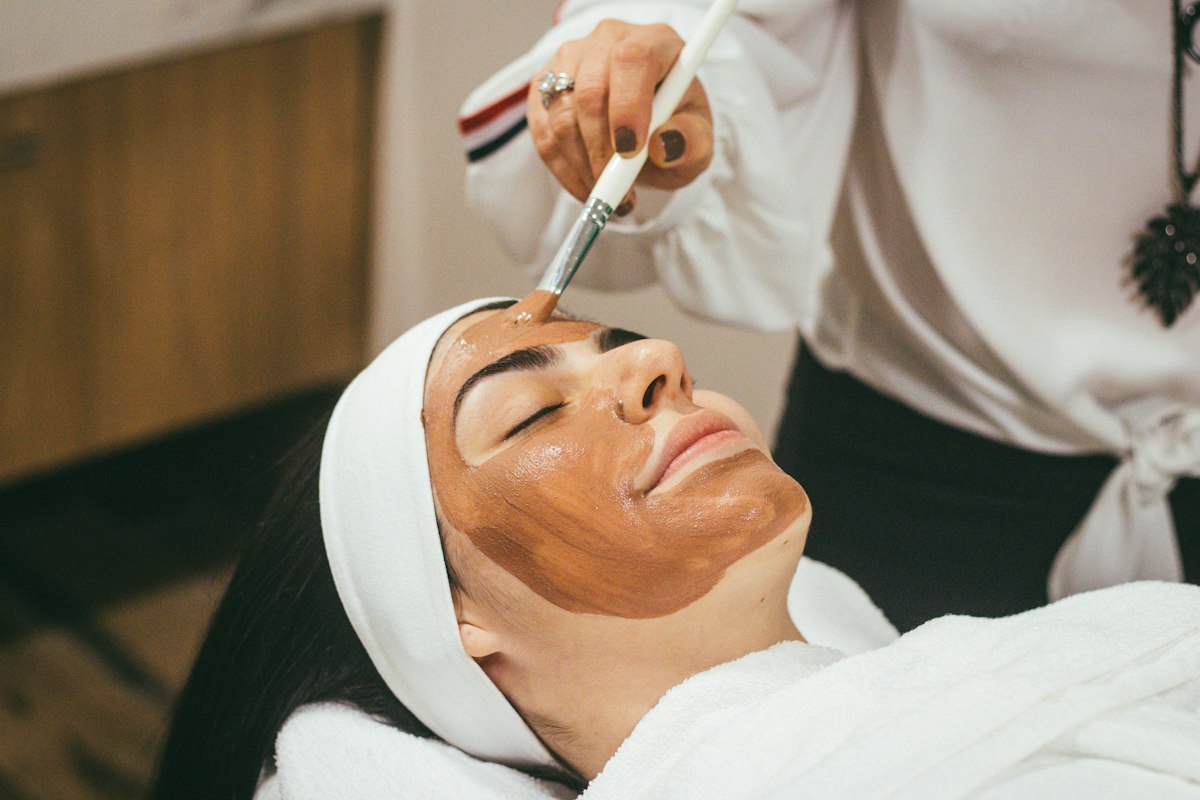
With 170 board-certified dermatology clinics concentrated in Gangnam-gu alone, Seoul is the world’s most competitive hub for aesthetic skin treatments.
Why Gangnam Leads the World in Aesthetic Dermatology
As of 2024, Seoul has 571 dermatology clinics — and 170 of them are packed into Gangnam-gu alone, a density no other urban district on earth can match. This concentration is not accidental. In Korea, a physician must complete four years of specialist residency at a university hospital dermatology department and pass a rigorous national board examination before earning the legal right to use the “dermatology specialist” designation. The result is a cohort of clinicians who are simultaneously highly trained and intensely competitive on price, technology, and patient experience. Foreign patient volumes reflect this global appeal: in 2023, medical tourist visits to Korean aesthetic clinics surged 762.8% from Japan and 866.7% from Taiwan year-on-year, driven almost entirely by skincare and lifting procedures.
The cost advantage is equally compelling for Westerners. Ultherapy — a single-session HIFU lifting treatment using the identical FDA-cleared US-made device — routinely costs two to four times more in the United States than at a top Gangnam clinic. Thermage FLX follows a similar pattern. For travelers combining a Seoul trip with a treatment, the total cost of flight, accommodation, and procedure often still undercuts the domestic price alone in the US, UK, or Australia, making Gangnam the world’s most rational destination for evidence-based, non-surgical aesthetics.
Quality Filter: Look for the red 피부과 전문의 (Dermatology Specialist) sign at the clinic entrance. Only board-certified dermatologists may display this mark legally. Clinics staffed by general practitioners are required by law to use a different, smaller-font designation — “Clinic; Specialty: Dermatology” — with no specialist signage. This single visual check filters out a significant share of low-quality operators before you even walk through the door.
Top English-Friendly Clinics in Gangnam (2026)
The clinics below have been selected based on verified English-language services, transparent pricing communication, and documented foreign patient infrastructure. Contact each clinic directly to confirm current physician availability, scheduling, and pricing before booking, as details are subject to seasonal change.
| Clinic | Location / Subway | Signature Treatments | English Contact | Notable Edge |
|---|---|---|---|---|
| Nest Skin Clinic Gangnam | Gangnam; 1-min walk, Sinnonhyeon Station (Line 9) | Botox (baby, jaw, regular), fillers, Rejuran, JUVE LOOK, Exosome, Pico/Fraxel/CO2 laser, Thermage FLX, Ultherapy, RF microneedling, PDO thread lift | English-speaking team; WhatsApp: +82-10-4843-2867 | Doctor-only 1:1 care — no coordinators; AI skin diagnostics (Mark-Vu system); all-female medical team: Dr. Joo Sohee (Ewha / Dongguk Univ.) & Dr. Lee Kyungyeon (Seoul National Univ.) |
| BAILOR Clinic Gangnam | 617 Gangnam-daero, Seocho-gu (4F Daeyang Building) | Botox, dermal fillers, Ultherapy, Thermage, Shurink, Inmode RF, PRP, HydraFacial, laser skin rejuvenation, body contouring, IV therapy | English / Japanese / Chinese; WhatsApp: +82-10-3054-1757 | Trilingual team; “Beauty Tailor” personalized philosophy; premium anti-aging focus under Medical Director Dr. Jimin Kang |
| Gangnam Arumdaun Nara Beauty Clinic | Gangnam (VisitKorea Medical Korea verified) | Thermage, Ultherapy, PDO thread lifting, advanced anti-aging protocols | English consultation available; KTO Medical Korea accredited | Pioneered Thermage in Korea (2004) and introduced Ultherapy to Korea (2009); 40+ SCI-indexed research papers (8 on Thermage, 4 on Ultherapy); multiple Minister of Health and Welfare Awards |
| You&I Clinic Gangnam | Gangnam (VisitKorea Medical Korea verified) | Aesthetic dermatology, skin rejuvenation treatments | English-friendly; KTO Medical Korea accredited | Officially verified under Korea Tourism Organization’s foreign patient program |
| ID Clinic Gangnam | Gangnam (VisitKorea Medical Korea verified) | Dermatology and aesthetic treatments | English-friendly; KTO Medical Korea accredited | Listed under Korea’s official Medical Korea international patient program |
Your Treatment Playbook: Botox, Lasers & Skin Boosters
Understanding what you are actually buying is half the battle in Gangnam. Korean clinics offer a wider treatment menu than most Western practices, and several procedures that are rarely available abroad are now standard here. Below is a plain-English primer on the most popular treatments among foreign patients in 2026, along with approximate starting price ranges to anchor your pre-consultation research.
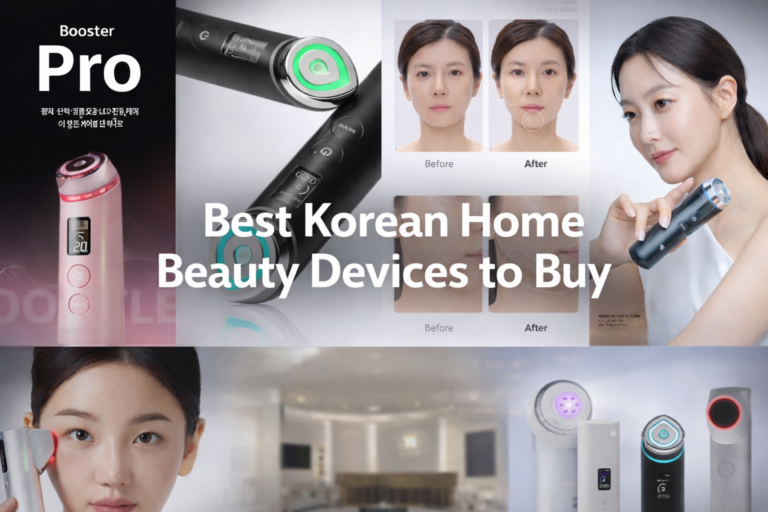
Botox. Three variants dominate the foreign patient market. Baby Botox (micro-dose injections spread across the full face) delivers a natural refresh without the frozen look, starting from approximately ₩100,000. Masseter Botox gradually slims the jawline over 4–6 weeks and is the single most requested procedure from Japanese and Chinese visitors, starting from around ₩200,000. Standard forehead and glabellar (frown line) Botox typically begins at ₩80,000–₩150,000 per area — significantly below US pricing for the identical product (Botox, Dysport, Medytox, or Nabota).
Skin Boosters. According to three senior Gangnam dermatologists surveyed by the Korea Tourism Organization, skin boosters are the single fastest-growing category entering 2026, driven by demand for natural, non-surgical results. REJURAN Healer (polynucleotide/PN derived from salmon DNA) targets elasticity and oil-water balance, from ₩300,000 per session. JUVE LOOK (poly-lactic acid/PLA) stimulates collagen production and tightens pores, from ₩280,000. Exosome therapy (stem cell culture extracts) repairs acne-prone or damaged tissue through anti-inflammatory action, from ₩350,000. These three are the treatments Korean dermatologists unanimously recommend as their top priority for first-time visitors with general skin quality concerns.
Lifting Devices and Lasers. Patient preferences diverge meaningfully by nationality. Chinese patients overwhelmingly choose Ultherapy (HIFU) — the original US-manufactured device is not authorized for import into China, so Korea is their only access point; expect to pay ₩800,000–₩2,000,000 for a full-face session, still 50–70% below US rates. Visitors from the US and Hong Kong favor Thermage FLX (monopolar RF) for its collagen-remodeling anti-aging results; a full-face session starts around ₩900,000. Japanese and Southeast Asian patients tend toward Pico and toning laser treatments for brightening and texture refinement, which begin from ₩100,000 per session and require multiple rounds. Shurink, a Korean-engineered HIFU device, offers Ultherapy-comparable lifting mechanics at a lower entry price point and is worth asking about at your consultation.
Insider Tip (via r/koreatravel): Book your consultation for a weekday morning — clinics are noticeably less crowded before noon on weekdays and doctors spend significantly more time per patient. Several r/koreatravel veterans report that walking in without a fixed treatment request and asking simply “what does my skin actually need today?” yields far better results than arriving with a predetermined list. Most reputable Gangnam clinics will run a complimentary full-face skin diagnostic scan (Mark-Vu, VISIA, or equivalent) before recommending any paid procedure — if a clinic skips this step and pushes straight to a sales consultation, that is a red flag worth heeding.

Conclusion: TalkMaru’s Verdict
Gangnam in 2026 is genuinely one of the most rational places on earth to access high-caliber, technology-forward dermatology — and the infrastructure for international patients has matured considerably. WhatsApp consultations, multilingual staff, transparent pricing pages, and doctor-led 1:1 care models have replaced the chaotic coordinator-driven experiences that dominated the space just five years ago. For first-timers seeking the lowest-friction English experience, Nest Skin Clinic and BAILOR Clinic are the standout choices. For unmatched clinical prestige and research credentials in Thermage and Ultherapy specifically, Gangnam Arumdaun Nara Beauty Clinic operates in a class of its own. Whichever clinic you choose: verify the specialist sign, insist on a direct doctor consultation, patch-test if it is your first laser session in Korea, and book your SPF50+ before you leave the building.
Thinking about using your Korean health insurance at the clinic? Here is the critical detail most foreigners miss: Botox, fillers, lasers, and all lifting treatments are classified as cosmetic procedures and are not covered by Korea’s National Health Insurance (NHI) — you will pay 100% out-of-pocket. Before your appointment, it pays to know exactly what NHI does and does not cover so there is zero bill-shock at the counter. Our sister site KimchiLandGuide breaks the whole system down in plain English: NHI Coverage Guide for Foreigners in Korea: What’s Covered & What’s Not (2026).